Featured Posts

Showing posts with label Environment. Show all posts

Mathematical Programming for Agricultural, Environmental & Resource Economics

Part 1 Linear Programming.
  • Chapter 1 Introductory Concepts And The Graphical Approach To Linear Programming.
  • Chapter 2 The Simplex Method To Solving Linear Programming Problems.
  • Chapter 3 Sensitivity Analysis Using The Simplex Method And Duality.
  • Chapter 4 Farm-Level Linear Programming Models.
  • Chapter 5 Transportation And Assignment Models For Food And Agricultural Markets.
  • Chapter 6 Natural Resource And Environmental Economics Applications Of Linear Programming.
Part 2 Relaxing The Assumptions Of Linear Programming.
  • Chapter 7 Integer And Binary Programming.
  • Chapter 8 Optimization Of Nonlinear Functions.
  • Chapter 9 Global Approaches To Nonlinear Optimization.
  • Chapter 10 Risk Programming Models.
  • Chapter 11 Price Endogenous Mathematical Programming Models.
  • Chapter 12 Goal Programming.
  • Chapter 13 Dynamic Programming.
Index.


Mathematical Programming for Agricultural, Environmental, and Resource Economics educates students on the techniques of mathematical programming and their application to agricultural, resource, and environmental economics problems. This text artfully combines an introductory text in math programming, algebraic and geometric concepts while also presenting differential calculus designed for upper-level undergraduates and graduate students. This text is designed specifically to help students develop the quantitative skills necessary for cutting edge research and techniques.


Key Features
  • FREE Risk Solver for Education software accompanies the text!
  • Combination of an introductory text in applied mathematical programming with a principle focus on relevant natural resource and environmental issues.
  • Designed for upper-level undergraduates and Masters-level graduate students majoring in economics, agricultural economics, environmental and resource economics, applied economics, and applied operations research.
  • Applies math programming models to real-world problems confronting agriculture, the environment, and natural resources.
  • Includes numerous exercises of varying level of difficulty: 20+ exercises with answers to odd-numbered questions for each chapter.


Book Details

  • Hardcover: 494 pages
  • Publisher: Wiley; 1 edition (January 18, 2012)
  • Language: English
  • ISBN-10: 0470599367
  • ISBN-13: 978-0470599365
  • Product Dimensions: 7.3 x 0.9 x 10 inches
List Price: $108.75 
 

Botkin: Environmental Science 8th Edition: Earth as a Living Planet

  • 1 Key Themes In Environmental Science.
  • 2 Science As A Way Of Knowing.
  • 3 The Big Picture: Systems Of Change.
  • 4 The Human Population And The Environment.
  • 5 Ecosystems.
  • 6 The Biogeochemical Cycle.
  • 7 Dollars And Environmental Sense.
  • 8 Biological Diversity And Biological Invasions.
  • 9 Ecological Restoration.
  • 10 Environmental Heath, Pollution, And Toxicology.
  • 11 Agriculture, Aquaculture, And The Environment.
  • 12 Landscapes: Forests, Parks, And Wilderness.
  • 13 Wildlife, Fisheries, And Endangered Species.
  • 14 Energy: Some Basics.
  • 15 Fossil Fuels And The Environment.
  • 16 Alternative Energy And The Environment.
  • 17 Nuclear Energy And The Environment.
  • 18 Water Supply, Use, And Management.
  • 19 Water Pollution And Treatment.
  • 20 The Atmosphere, Climate, And Global Warming.
  • 21 Air Pollution.
  • 22 Urban Environments.
  • 23 Materials Management.
  • 24 Our Environmental Future.


Environmental Science: Earth as a Living Planet 8th Edition provides emphasis on the scientific process throughout the book gives readers the structure to develop their critical thinking skills. Updated and revised to include the latest research in the field, the eighth edition continues to present a balanced analytical and interdisciplinary approach to the field. New streamlined text clears away the "jargon" to bring the issues and the science to the forefront. The new design and updated image program highlights key points and makes the book easier to navigate.


Key Features
  • Scientific method is presented early to give students the foundation they need to understand topics presented throughout the book.
  • Chapter-opening Case Studies give students interesting, relevant examples of issues and topics.
  • Objectivity of Presentation. In a discipline full of controversy and policy, it is critical that the text present the content in a non-biased, objective manner. In addition to the clearly objective content presentation, the text also offers additional tools to help students think for themselves.
  • Critical Thinking Issues within each chapter present students with alternate views of an important environmental issue and ask them to decide for themselves.
  • Environmental Debates Online will be found on the BCS and will provide information from all sides of a controversial environmental issue offering a collection of links and summaries of primary sources and posing questions to students.
  • Six Themes of Environmental Science. Six central themes integrated throughout the text help unify the concepts: Human Population Growth, Sustainability, A Global Perspective, An Urban World, People and Nature, Science and Values. These themes are highlighted in the Closer Look boxes and are brought together with Reexamining Themes sections at the end of each chapter to help the student to further understand how the material they have just studied is connected to each one of the book’s six themes.


New to this edition
  • The eighth edition offers 24 Chapters, (the seventh edition was 29 chapters).
  • New streamlined text clears away the “jargon” to bring the issues and the science to the forefront.
  • New Chapter 24: Our Environmental Future provides a capstone chapter for the course.
  • Data and research has been updated to provide the most up-to-date information in the field.


Book Details

  • Hardcover: 656 pages
  • Publisher: Wiley; 8 edition (December 21, 2010)
  • Language: English
  • ISBN-10: 0470520337
  • ISBN-13: 978-0470520338
  • Product Dimensions: 11 x 8.9 x 1.2 inches
List Price: $144.60 
 

Goodstein: Economics & the Environment 6th Edition

INTRODUCTION
  • Chapter 1 Four Economic Questions about Global Warming
PART I: HOW MUCH POLLUTION IS TOO MUCH?
  • Chapter 2 Ethics and Economics
  • Chapter 3 Pollution and Resource Degradation as Externalities
  • Chapter 4 The Efficiency Standard
  • Chapter 5 The Safety Standard.
  • Chapter 6 Sustainability: A Neoclassical View.
  • Chapter 7 Sustainability: An Ecological View.
  • Chapter 8 Measuring the Benefits of Environmental Protection.
  • Chapter 9 Measuring the Costs of Environmental Protection.
  • Chapter 10 Benefit–Cost in Practice: Implementing the Efficiency Standard.
  • Chapter 11 Is More Really Better? Consumption and Welfare.
PART II: IS GOVERNMENT UP TO THE JOB?
  • Chapter 12 The Political Economy of Environmental Regulation.
  • Chapter 13 An Overview of Environmental Legislation.
  • Chapter 14 The Regulatory Record: Achievements and Obstacles.
  • Chapter 15 Monitoring and Enforcement.
PART III: HOW CAN WE DO BETTER?
  • Chapter 16 Incentive-Based Regulation: Theory.
  • Chapter 17 Incentive-Based Regulation: Practice.
  • Chapter 18 Promoting Clean Technology: Theory.
  • Chapter 19 Energy Policy and the Environment.
PART IV: CAN WE RESOLVE GLOBAL ISSUES?
  • Chapter 20 Poverty, Population, and the Environment.
  • Chapter 21 Environmental Policy in Poor Countries.
  • Chapter 22 The Economics of Global Agreements.


Climate change and environmental policy are rapidly changing the world’s economic progress and outlook. Economics and the Environment provides students with a clear, concise, and comprehensive presentation of the standard analysis to environmental and resource economics. The text is also a compelling look at broader topics including the government’s role in environmental policy and more advanced theories. With a unique framework and compelling narrative style, Goodstein supplies timely discussions on the various approaches, schools, and research that are crucial for today’s students to consider for tomorrow’s world.


Key Features
  • Four Questions organize the text’s theories and applications for the course in a way that students can understand.
  • 1.) How much pollution and resource degradation is too much?
  • 2.) Is government up to the job?
  • 3.) How can we do better?
  • 4.) How can we resolve global issues?
  • Balanced introductory coverage of neoclassical versus ecological approaches to sustainability. Dual chapters explain the longstanding controversy through demonstrations of how to evaluate the costs of an environmental crisis.
  • Accessible economics for both economics and environmental studies students. No matter what the students’ background or attitude, the text acknowledges common environmentalist objections to economics, and then invites the students to learn more.
  • Credible and insightful author is Director of the Bard Center for Economic Policy and runs weekly follow-ups to the National Teach-In on Global Warming called The National Climate Dialogue.
  • Student-friendly writing style and puzzles encourage students to learn more about substantive topics such as depreciating stocks of oil and other natural capital.
  • The most up-to-date coverage of environmental hot topics.


New to this edition
  • Significantly Revised Introductory Chapter provides a clear, accurate introduction of the current debate on global warming economics, including the Stern report and the advance in the benefit-cost discussion, Weitzman’s work on discounting and insurance, and complementing price policy with non-price efficiency.
  • Newly Revised Political Economy Chapters (12-15) reflect the impact of the Bush Administration on the structure of regulation and enforcement and Obama’s policy framework.
  • Updated discussions of cap-and-trade, pollution tax policy, and clean technology to reflect recent European and US experiences, concerns about biofuels, and new developments in the clean tech sector.
  • New Coverage of green jobs and the stimulus argument.
  • New End-of-Chapter Exercises and Applications give students an opportunity to work through and understand concepts and principles.
  • Newly updated examples and references.


Book Details

  • Paperback: 528 pages
  • Publisher: Wiley; 6 edition (October 5, 2011)
  • Language: English
  • ISBN-10: 0470561092
  • ISBN-13: 978-0470561096 

List Price: $100.99 

Raven: Environment 8th Edition

  • Chapter 1 - Introducing Environmental Science and Sustainability
  • Chapter 2 - Environmental Laws Economic and Ethics
  • Chapter 3 - Ecosystems and Energy
  • Chapter 4 - Ecosystems and the Physical Environment
  • Chapter 5 - Ecosystems and Living Organisms
  • Chapter 6 - Major Ecosystems of the World
  • Chapter 7 - Human Health and Environmental Toxicology
  • Chapter 8 - The Human Population
  • Chapter 9 - The Urban World
  • Chapter 10 - Energy Consumption
  • Chapter 11 - Fossil Fuels
  • Chapter 12 - Renewable Energy and Nuclear Power
  • Chapter 13 - Water: A Limited Resource
  • Chapter 14 - Soil Resources
  • Chapter 15 - Mineral Resources
  • Chapter 16 - Biological Resources
  • Chapter 17 - Land Resources
  • Chapter 18 - Food Resources
  • Chapter 19 - Air Pollution
  • Chapter 20 - Global Climate Change
  • Chapter 21 - Water Pollution
  • Chapter 22 - Pest Management
  • Chapter 23 - Solid and Hazardous Waste
  • Chapter 24 - Tomorrow's Word


Raven, Hassenzahl, and Berg's Environment threads the central themes of Systems and Sustainability throughout the text to help students understand the connection between the core concepts of Environmental Science and their daily lives. The 8th edition features a rich collection of current case studies and in-text examples, highlighting these local and regional issues, and providing students with the science and tools to understand, apply, and think critically about environmental science.

In addition to the text, the integrated learning design of WileyPLUS incorporates a wealth of animations, videos, podcasts, and interactive exercises, and gives instructors a powerful tool to assess individual students and the class as a whole.


Key Features
  • A focus on Systems and Sustainability highlight how the various aspects of the environment interact, and how changes in one part of the environment might affect other processes, places and organisms. Understanding this is essential to managing existing problems, avoiding future problems and improving the world we live in.
  • Integrated media resources: Using WileyPLUS for Environmental Science is a significant tool for faculty by providing them with a mechanism for motivating students while integrating supplementary resources, including new videos and animations. WileyPLUS provides students with an accessible, affordable, and active learning platform and provides tools and resources to efficiently build presentations for a dynamic classroom experience and manage effective assessment strategies. The underlying principles of design, engagement, and measurable outcomes provide the foundation for this powerful, new release of WileyPLUS.
  • The definitive text for "What's Local". The 8th edition includes a Regional Index which lists in the in text case studies and examples that appear throughout the text, helping instructors and students can easily navigate to find the key issues in their area. Additional case studies are available for customization through Environmental Science Regional Case Study collection through Wiley Custom Select and by visiting the Wiley ES Backyard Blog at wileyesbackyard.com.
  • Well-developed extensive pedagogy and offers a clear way for students to move from general concepts to applications of key concepts. Each chapter includes: 
    • Chapter introductions that illustrate certain concepts in the chapter with stories about some of today's most pressing environment issues;
    • Learning Objectives and Review Questions for each chapter section giving students structured and immediate opportunities for review; 
    • EnviroNews highlighting interesting, newsworthy facts that enhance text material; 
    • EnviroNews on Campus reports on recent campus and student efforts to improve the environment; 
    • Case in Point features offers a wide variety of in-depth case studies that address important issues in the field of environmental science; 
    • Meeting the Challenge featuring profile environmental success stories; 
    • You Can Make a Difference segments offering practical lifestyle changes that students can make to improve the environment; 
    • Margin Glossaries providing handy definitions of the most important terms; 
    • Suggested Reading lists for each chapter are also available online to provide current references for further learning.
  • New In Your Own Backyard features provides increased opportunities for Critical Thinking and helps students apply the core concept of each chapter to their own lives.
  • Currency. All chapters have been painstakingly researched so that the most current evidence is cited including the 2011 Population Reference Bureau data, incorporated within the chapters and as a foldout at the back of the text. Both students and professors will benefit from the book's currency because environmental issues and trends are continually changing as new information becomes available.
  • Author team offers a varied background. Peter Raven is an internationally respected botanist, environmentalist, world-renowned ecologist and director of the Missouri Botanical Gardens; David Hassenzahl is well-regarded among environmental scientists for his work in risk analysis and is the Founding Dean of the School of Sustainability and the Environment at Chatham University ; and Linda Berg is an experienced biology/botany educator who has taught both at the two and four-year college level and writer.


New to this edition
  • The 8th edition builds on the central theme on Systems and Sustainability through key changes in the organization of the text includes revised coverage of population and energy, featuring a new Chapter 8 "The Human Population" including the 2011 population data and three chapters that present revised and updated energy coverage.
  • The new edition additionally includes:
    • "In Your Own Backyard" critical thinking questions with a paired end of chapter activity, that asks students to make connections between chapter material and their own lives, end of chapter Critical Thinking Questions which are directly correlated to in chapter learning objectives, and
    • "Energy and Climate Change" Icon indicating critical thinking questions which are tied to key graphs and illustrations.
  • To help navigate the examples and case studies provided in the text, the authors have created a Regional Index which guides students and instructors to current issues both within the US and abroad.


About the Author
  • Peter H. Raven, one of the world's leading botanists, has dedicated nearly three decades to conservation and biodiversity as Director of the Missouri Botanical Garden in St. Louis, where he has cultivated a world-class institution of horticultural display, education, and research. Described by Time magazine as "Hero for the Planet," Dr. Raven champions research around the world to preserve endangered species and is a leading advocate for conservation and a sustainable environment. Dr. Raven is chair of the National Geographic Society's Committee for Research and Exploration and he is President of the American Association for the Advancement of Science. He is the receipient of numerous prizes and awards, including Japan's International Prize for Biology, the Environmental Prize of the Institute de la Vie, the Volvo Environment Prize, the Tyler Prize for Environment Achievement, and the Sasakawa Environment Prize. He also has held Guggenheim and MacArthur fellowships. Dr. Raven received his Ph.D. from the University of California, Los Angeles, after completitng his undergraduate work at the University of California, Berkeley.
  • Linda R. Berg is an award-winning teacher and textbook author. She received a B.S. in science education, M.S. in botany, and Ph.D. in plant physiology from the University of Maryland. Her research focused on the evolutionary implications of steriod biosynthetic pathways in various organisms. Dr. Berg taught at the University of Maryland-College Park, for 17 years, and is presently an Adjunct Professor at St. Petersburg Junior College in Florida. She has taught introductory courses in environmental science, biology, and botany to thousands of students since 1972. At the University of Maryland, she received numerous teaching and service awards. Dr. Berg is also the receipient of many national and regional awards, including the National Science Teachers Association Award for Innovations in College Teaching, the Nation's Capital Area Disabled Student Services Award, and the Washington Academy of Sciences Award in University Science Teaching. During her career as a professional science writer, Dr. Berg has authored or coauthored several leading college science textbooks. Her writing reflects her teaching style and love of science.


Book Details

  • Paperback: 592 pages
  • Publisher: Wiley; 8 edition (November 22, 2011)
  • Language: English
  • ISBN-10: 0470945702
  • ISBN-13: 978-0470945704
  • Product Dimensions: 10.6 x 9.2 x 0.8 inches
List Price: $145.12 
 

Berg: Visualizing Environmental Science 3rd Edition

1. The Environmental Challenges We Face.
  • Introduction: A World in Crisis.
  • Human Impacts on the Environment.
  • Sustainability and Earth's Capacity to Support Humans.
  • Environmental Science.
  • How We Handle Environmental Problems.
  • Case Study: The New Orleans Disaster.
2. Environmental Sustainability and Human Values.
  • Introduction: The Global Commons.
  • Human Use of the Earth.
  • Human Values and Environmental Problems.
  • Environmental Justice.
  • An Overall Plan for Sustainable Living.
  • Case Study: Jakarta, Indonesia.
3. Environmental History, Politics, and Economics.
  • Introduction: Old Growth Forest of the Pacific Northwest.
  • Conservation and Preservation of Resources.
  • Environmental History.
  • Environmental Legislation.
  • Environmental Economics.
  • Case Study: Environmental Problems in Central and Eastern Europe.
4. Risk Analysis and Environmental Health Hazards.
  • Introduction: Pesticides and Children.
  • A Perspective on Risks.
  • Environmental Health Hazards.
  • Movement and Fate of Toxicants.
  • How We Determine the Health Effects of Pollutants.
  • The Precautionary Principle.
  • Case Study: Endocrine Disrupters.
5. How Ecosystems Work.
  • Introduction: Lake Victoria's Ecological Imbalance.
  • What is Ecology?
  • The Flow of Energy Through Ecosystems.
  • The Cycling of Matter in Ecosystems.
  • Ecological Niches.
  • Interactions Among Organisms.
  • Case Study: Global Climate Change: Is There an Imbalance in the Carbon Cycle?
6. Ecosystems and Evolution.
  • Introduction: The Florida Everglades.
  • Earth's Major Biomes.
  • Aquatic Ecosystems.
  • Population Responses to Changing Conditions Over Time: Evolution.
  • Community Responses to Changing Conditions over Time: Succession.
  • Case Study: Wildfires.
7. Human Population Change and the Environment.
  • Introduction: Slowing Population Growth in China.
  • Population Ecology.
  • Human Population Patterns.
  • Demographics of Countries.
  • Stabilizing World Population.
  • Population and Urbanization.
  • Case Study: Urban Planning in Curitiba, Brazil.
8. Air and Air Pollution.
  • Introduction: Long-Distance Transport of Air Pollution.
  • The Atmosphere.
  • Types and Sources of Air Pollution.
  • Effects of Air Pollution.
  • Controlling Air Pollutants.
  • Indoor Air Pollution.
  • Case Study: Curbing Air Pollution in Chattanooga.
9. Global Atmospheric Changes. 
  • Introduction: Melting Ice and Rising Sea Levels.
  • The Atmosphere and Climate.
  • Global Climate Change.
  • Ozone Depletion in the Stratosphere.
  • Acid Deposition.
  • Case Study: International Implications of Global Climate Change.
10. Freshwater Resources and Water Pollution.
  • Introduction: The Missouri River: A Battle Over Water Rights.
  • The Importance of Water.
  • Water-Resource Problems.
  • Water Management.
  • Water Pollution.
  • Improving Water Quality.
  • Case Study: Water Pollution in the Great Lakes.
11. The Ocean and Fisheries.
  • Introduction: Depleting Bluefin Tuna Stocks.
  • The Global Ocean.
  • Major Ocean Life Zones.
  • Human Impacts on the Ocean.
  • Addressing Ocean Problems.
  • Case Study: Humans and the Antarctic Food Web.
12. Mineral and Soil Resources.
  • Introduction: Copper Basin, Tennessee.
  • Plate Tectonics and The Rock Cycle.
  • Economic Geology: Useful Minerals.
  • Environmental Implications of Mineral Use.
  • Soil Properties and Processes.
  • Soil Problems and Conservation.
  • Case Study: Industrial Ecosystems.
13. Land Resources.
  • Introduction: Korup National Park.
  • Land Use in the United States.
  • Forests.
  • Rangelands.
  • National Parks and Wilderness Areas.
  • Conservation of Land Resources.
  • Case Study: The Tongas Debate Over Clear-Cutting.
14. Agriculture and Food Resources.
  • Introduction: Maintaining Grain Stockpiles for Food Security.
  • World Food Problems.
  • The Principle Types of Agriculture.
  • Challenges of Agriculture.
  • Solutions to Agriculture Problems.
  • Controlling Agriculture Pests.
  • Case Study: DDT and the American Bald Eagle.
15. Biological Resources.
  • Introduction: Disappearing Frogs.
  • Species Richness and Biological Diversity.
  • Endangered and Extinct Species.
  • Conservation Biology.
  • Conservation Policies and Laws.
  • Case Study: Reintroducing the California Condor.
16. Solid and Hazardous Waste.
  • Introduction: Reusing and Recycling Old Automobiles.
  • Solid Waste.
  • Reducing Solid Waste.
  • Hazardous Waste.
  • Managing Hazardous Waste.
  • Case Study: High-Tech Waste.
17. Nonrenewable Energy Resources.
  • Introduction: Addiction to Oil.
  • Energy Consumption.
  • Coal.
  • Oil and Natural Gas.
  • Nuclear Energy.
  • Case Study: The Arctic National Wildlife Refuge.
18. Renewable Energy Resources.
  • Introduction: Cleaner Cars, Cleaner Fuels.
  • Direct Solar Energy.
  • Indirect Solar Energy.
  • Other Renewable Energy Sources.
  • Energy Solutions: Conservation and Efficiency.
  • Case Study: Green Architecture.
Glossary.
Credits.
Index.


Now in its 3rd edition, Visualizing Environmental Science offers students a valuable opportunity to identify and connect the central issues of environmental science through a visual approach. The 3rd edition has refined and expanded the visuals using insights from research on student learning. 
Visualizing Environmental Science 3e is designed to help students acquire the skills they need to become better learners. The visualizing approach reduces the cognitive load of complex processes, organizes related pieces of information, and integrates information into clear representations. 

Beautifully illustrated, Visualizing Environmental Science 3e shows your students what the discipline is all about—its main concepts and applications—while also instilling an appreciation and excitement about the richness of the subject.

Key Features
  • Chapter Introductions illustrate certain concepts in the chapter with concise stories about some of today’s most pressing environmental issues. These narratives are featured alongside striking accompanying photographs. The chapter openers also include illustrated Chapter Outlines that use thumbnails of illustrations from the chapter to refer visually to the content.
  • Visualizing features are specially designed multi-part visual spreads that focus on a key concept or topic in the chapter, exploring it in detail or in broader context using a combination of photos and figures.
  • Process Diagrams present a multi-step figure or a combination of figures that describes and depicts a complex process, helping students to observe, follow, and understand the process.
  • What a Scientist Sees features highlight a concept or phenomenon, using photos and figures that would stand out to a professional in the field, and helping students to develop observational skills.
  • EnviroDiscovery features provide additional topical material about relevant environmental issues.
  • The illustrated Case Studies that cap off the text sections of each chapter offer a wide variety of in-depth examinations that address important issues in the field of environmental science.

New To This Edition
  • New coauthor in Dave Hassenzahl, Chatham University.
  • New data interpretation features attached to visuals to help engage students.
  • New “critical thinking” questions and “from global to local” questions attached to visuals.
  • Virtual fieldtrips.
  • Chapter openers were updated including: Drought in Australia.
  • Updated case studies including: the environmental impacts of China’s Three Gorges Dam and the Loess Plateau in China.
  • Refined and expanded visuals based on insights from research on student learning.
  • Updates to the “EnviroDiscovery” feature including: an emerging urban feature: Green Roofs.
  • Process diagrams explaining and providing examples of Environmental Impact Analyses.

Book Details

  • Paperback: 528 pages
  • Publisher: Wiley; 3 edition (September 22, 2011)
  • Language: English
  • ISBN-10: 0470569182
  • ISBN-13: 978-0470569184
  • Product Dimensions: 10.8 x 9.1 x 0.8 inches
List Price: $79.50 
 

Kemp: Vegetation Description & Data Analysis: A Practical Approach 2nd Edition

  • Safety in the field
  • Chapter 1 The nature of quantitative plant ecology and vegetation science
  • Chapter 2 Environmental gradients, plant communities and vegetation dynamics
  • Chapter 3 The description of vegetation in the field
  • Chapter 4 The nature and properties of vegetation data
  • Chapter 5 Basic statistical methods for understanding multivariate analysis
  • Chapter 6 Ordination methods
  • Chapter 7 Phytosociology and the Z¨urich-Montpellier (Braun-Blanquet) School of subjective classification
  • Chapter 8 Numerical classification, cluster analysis and phytosociology
  • Chapter 9 Computer software for the analysis of vegetation and environmental/biotic data
  • Chapter 10 Future developments in vegetation science and quantitative plant ecology
  • References
  • Index


Vegetation Description and Data Analysis: A Practical Approach, Second Edition is a fully revised and up-dated edition of this key text. The book takes account of recent advances in the field whilst retaining the original reader-friendly approach to the coverage of vegetation description and multivariate analysis in the context of vegetation data and plant ecology.

Since the publication of the hugely popular first edition there have been significant developments in computer hardware and software, new key journals have been established in the field and scope and application of vegetation description and analysis has become a truly global field. This new edition includes full coverage of new developments and technologies.

This contemporary and comprehensive edition of this well-known and respected textbook will prove invaluable to undergraduate and graduate students in biological sciences, environmental science, geography, botany, agriculture, forestry and biological conservation.


Key Features
  • Fully international approach.
  • Includes illustrative case studies throughout.
  • Now with new material on: the nature of plant communities; transitional areas between plant communities; induction and deduction of plant ecology; diversity indices and dominance diversity curves; multivariate analysis in ecology.
  • Accessible, reader-friendly style.
  • Now with new and improved illustrations.


About the Author
  • Martin Kemp is the Emeritus Professor of Biogeography, School of Geography, Earth and Environmental Sciences at the University of Plymouth, Devon, UK. His website can be found.


Book Details

  • Paperback: 432 pages
  • Publisher: Wiley-Blackwell; 2nd edition (Nov 11, 2011)
  • Language: English
  • ISBN-10: 0471490938
  • ISBN-13: 978-0471490937
  • Product Dimensions: 9.7 x 7.5 x 0.9 inches
List Price: $60.00 
 

Fair, Geyer, and Okun's, Water and Wastewater Engineering 3rd edition: Water Supply and Wastewater Removal

Based on the classic text by Fair, Greyer, and Okun, this new edition has been completely revised and updated including eight completely new chapters by university professors and engineers practicing in the field. It reflects current practice, includes access to an academic version of the commercial software Haestad Methods Water Solutions by Bentley, and now includes homework problems.

This is a time of mounting urbanization and industrialization and resulting stress on water and wastewater systems. Clean and ample sources of water for municipal uses are becoming harder to find and more expensive to develop. Effective design and efficient operation of engineering works ask, above all, for a fuller understanding and application of scientific principles. The results of scientific research are being incorporated with remarkable success in new designs using both U.S. and SI systems equations, examples and problems as well as new operating procedures. This classic text, now updated, grounds readers in both the science and art of water and wastewater engineering that global engineers need to service their customers and communities.

Key Features
  • Solved Problems - a reliable problem solving experience for students is carried throughout the text and demonstrated in every example problem to reinforce best practices.
  • Photos and Illustrations are used throughout the text to clarify infrastructure systems and show examples of built and constructed water supply and wastewater collection features.
  • Current Water and Wastewater Infrastructure Issues.
  • Example Problems with both U.S. and SI Units.
  • Applied Hydraulics and Hydrology.
  • Prevention through Design (PtD) and System Safety.
  • Software - Included with this text is access to selected software from Haestad Methods Water Solutions by Bentley. Multiple software exhibited in the text include: WaterGEMS , SewerCAD, and StormCAD.

New to this edition
  • Two new co-authors, known and proven in the civil and environmental community - Nazih K. Shammas and Lawrence K. Wang.
  • Eight new chapters.
  • Example problems and homework exercises.
  • The book website will include the instructor solutions manual, and image gallery.

Contents 
  • Chapter 1 Introduction to Water Systems.
  • Chapter 2 Water Sources: Surface Water.
  • Chapter 3 Water Sources: Groundwater.
  • Chapter 4 Quantities of Water and Wastewater Flows.
  • Chapter 5 Water Hydraulics.
  • Chapter 6 Water Distribution Systems.
  • Chapter 7 Water Distribution Systems: Modeling and Computer Applications.
  • Chapter 8 Pumping Storage and Dual WaterSystems.
  • Chapter 9 Cross Connection Control.
  • Chapter 10 Introduction to Wastewater Systems.
  • Chapter 11 Hydrology Rainfall and Runoff.
  • Chapter 12 Urban Runoff and Combined Sewer Overflow Management.
  • Chapter 13 Hydraulics of Sewer Systems.
  • Chapter 14 Design of Sewer Systems.
  • Chapter 15 Sewerage Systems Modeling and Computer Applications.
  • Chapter 16 Sewer Material, Appurtenances, and Maintenance.
  • Chapter 17 Trenchless Technology and Sewer System Rehabilitation.
  • Chapter 18 Alternative Wastewater Collection Systems.
  • Chapter 19 Engineering Projects Management.
  • Chapter 20 Prevention through Design and System Safety.


Product Details

  • Hardcover: 824 pages
  • Publisher: Wiley; 3 edition (October 19, 2010)
  • Language: English
  • ISBN-10: 0470411929
  • ISBN-13: 978-0470411926
List Price: $143.72

Mays: Water Resources Engineering 2nd edition

With a remarkable range and depth of coverage, Professor Mays; internationally recognised for his highly acclaimed textbooks and work in the field; presents a straight forward, easy to understand presentation of hydraulic and hydrologic processes using the control volume approach. These processes are then extended into practical applications for water use and water excess, including water distribution systems, stormwater control, and flood storage systems.
Water Resources Engineering is a textbook that can be used for the first undergraduate courses in hydraulics, hydrology, or water resources engineering and for upper level undergraduate and graduate courses in water resources engineering design. This text is also intended as a reference for practicing hydraulic engineers, civil engineers, mechanical engineers, environmental engineers, and hydrologists.

Key Features
  • Material is presented from first principles in a rigorous fashion - Basic principles (continuity, energy, momentum) are all based upon a control volume approach, which provides a natural way for students to be introduced to concepts in hydrology and hydraulics.
  • Text is design oriented - No other water resources or hydraulics books are as design oriented. The design problems are presented in detail and are relevant to the practice of hydrology, hydraulics and water resources. Design procedures outlined in the text are consistent with government design procedures.
  • Examples are real world based - Example problems and solutions help the student to hone their problem-solving skills. Practice problems at the end of each chapter offer the opportunity for students to apply the concepts they have learned.
  • Wide coverage of topics- Provides a complete picture of water resources engineering by integrating the fundamental concepts of fluid mechanics, hydraulics, hydrology, and water resources. Text also includes a quick review of basic fluid concepts and the control volume approach to fluid mechanics.

New to this edition
  • New Chapter 2 “Water Resources Sustainability”
  • New Chapter 19 “Water Resources: Management for Sustainability”
  • Added to Chapter 5 on “Hydraulic Processes”:
  • Slope-Area Method
  • Direct step Method
  • Added to Chapter 10 on “Probability, Risk, and Uncertainty Analysis…”:
  • Gumbel (Extreme Value Type I) Distribution
  • Frequency Factor Equation
  • Application of log-Pearson III Distribution
  • Extreme Value Distribution
  • New example on pumps and pseudo loops in Chapter 12 (section 12.6.3)

Contents 
  • Chapter 1 Introduction.
  • Chapter 2 Water Resources Sustainability.
  • Chapter 3 Hydraulic Processes: Flow and Hydrostatic Forces.
  • Chapter 4 Hydraulic Processes: Pressurized Pipe Flow.
  • Chapter 5 Hydraulic Processes: Open-Channel Flow.
  • Chapter 6 Hydraulic Processes: Groundwater Flow.
  • Chapter 7 Hydrologic Processes.
  • Chapter 8 Surface Runoff.
  • Chapter 9 Reservoir and Stream Flow Routing.
  • Chapter 10 Probability, Risk, and Uncertainty Analysis for Hydrologic and Hydraulic Design.
  • Chapter 11 Water Withdrawals and Uses.
  • Chapter 12 Water Distribution.
  • Chapter 13 Water for Hydroelectric Generation.
  • Chapter 14 Flood Control.
  • Chapter 15 Stormwater Control: Storm Sewers and Detention.
  • Chapter 16 Stormwater Control: Street and Highway Drainage and Culverts.
  • Chapter 17 Design of Spillways and Energy Dissipation for Flood Control Storage and Conveyance Systems.
  • Chapter 18 Sedimentation and Erosion Hydraulics.
  • Chapter 19 Water Resources Management for Sustainability.
Appendix A Newton–Raphson Method.
  • Finding the Root for a Single Nonlinear Equation.
  • Application to Solve Manning's Equation for Normal Depth.
  • Finding the Roots of a System of Nonlinear Equations.
Index.

About the Author
Larry W. Mays is Professor in the Civil, Environmental, and Sustainable Engineering Group in the School of Sustainable Engineering and the Build Environment at Arizona State University (ASU), and former chair of the Department of Civil and Environmental Engineering. Prior to ASU he was Director of the Center for Research in Water Resources at the University of Texas at Austin, where he held an Engineering Foundation-endowed professorship. A registered professional engineer in several states, and a registered professional hydrologist, he has served as a consultant to many national and international Organizations.
Professor Mays has published extensively in refereed journal publications and in the proceedings of national and international conferences. He was the author of the first edition of this book and Optimal Control of Hydrosystems (published by Marcel Dekker), and co-author of Applied Hydrology and Hydrosystems Engineering and Management (both from McGraw-Hill) and Groundwater Hydrology (published by John Wiley & Sons, Inc.). He was editor-in-chief of Water Resources Handbook, Water Distribution Systems Handbook, Urban Water Supply Management Tools, Stormwater Collection Systems Design Handbook, Urban Water Supply Handbook, Urban Water Resources Sustainability, all published by McGraw-Hill. In addition, he was editor-in-chief of Reliability Analysis of Water Distribution Systems and co-editor of Computer Methods of Free Surface and Pressurized Flow published by McGraw-Hill. In addition, he was editor-in-chief of Reliability Analysis of Water Distribution Systems and co-editor of Computer Methods of Free Surface and Pressurized Flow published by Kluwer Academic Publishers.


Product Details 
  • Hardcover: 920 pages
  • Publisher: Wiley; 2 edition (June 8, 2010)
  • Language: English
  • ISBN-10: 0470460644
  • ISBN-13: 978-0470460641
List Price: $132.02

Comninellis: Electrochemistry for the Environment

  • Role of Electrochemistry in Environmental Sciences and Engineering.
  • Basic Principles of the Electrochemical Mineralization of Organic Pollutants for Wastewater Treatment.
  • Importance of electrode material in the electrochemical treatment of wastewater containing organic pollutants. 
  • Techniques of electrode fabrication. 
  • Modeling of electrochemical process for the treatment of wastewater containing organic pollutants. 
  • Green electro-organic synthesis using BDD electrodes. 
  • Domestic and industrial water disinfection using Boron-Doped Diamond electrodes. 
  • Drinking Water Disinfection by Inline-Electrolysis – Product and Inorganic By-Product Formation. 
  • Case studies in the electrochemical treatment of wastewater containing organic pollutants using BDD. 
  • The persulfate process for the mediated oxidation of organic pollutants. 
  • Electrochemical coagulation in wastewater treatment. 
  • Electroflotation. 
  • Principles and applications of solid polymer electrolyte reactors for electrochemical hydrodehalogenation of organic pollutants.
  • Preparation, Analysis and Behaviors of Ti Based SnO2 Electrode and the Function of Rare-earth Doping in Aqueous Wastes Treatment.
  • Wet Electrolytic Oxidation of Organics and Application for Sludge Treatment. 
  • Photoelectrocatalytic Materials for Environmental Applications. 
  • Solar disinfection of water by TiO2 photo-assisted processes: Physicochemical, biological and engineering aspects. 
  • Fabrication of photoelectrode materials. 
  • Use of both anode and cathode reactions in wastewater treatment


Wastewater treatment technology is undergoing a profound transformation due to far-reaching changes in regulations governing the discharge and disposal of hazardous pollutants.

Electrochemistry for the Environment first lays down the fundamentals of environmental electrochemistry, introducing the basic techniques in selecting electrode materials and fabricating them, followed by the theoretical analysis of the electrochemical processes and the green electrochemical operation. Then it discusses the electrochemical technologies in water/wastewater treatment using BDD before moving on to an examination of the established wastewater treatment technologies such as electro-coagulation, -flotation, and -oxidation. Additionally, emerging technologies such as electrophotooxidation, electrodisinfection, and electrochemical technologies in sludge and soil treatment are analyzed.

This book is an excellent reference for electrochemists, chemical engineers, environmental engineers, civil engineers, and also for those in industry evaluating and implementing new technologies.


Key Features
  • Presents wide-ranging applications of electrochemistry to environmental problems.
  • Surveys water treatment technologies.
  • Includes coverage of green chemistry.
  • Presents analysis of emerging technologies such as electrophotooxidation, electro disinfection and electromechanical technologies in sludge and soil treatment.


About the Authors
This 350 pages volume contains the contributions from 18 international experts on the key topics concerning environmental chemistry. It is co-edited by Dr. Chen and Prof. Comninellis. Dr. Chen has been working actively in this field for nearly 10 years and is currently an Editor of Separation and Purification Technology. Professor Comninellis is an international authority on environmental electrochemistry with over 30 years of experiences. He is the Chairman of the Electrochemical Process Division of the International Society of Electrochemistry.


Book Details

  • Hardcover: 576 pages
  • Publisher: Springer; 1 edition (October 28, 2010)
  • Language: English
  • ISBN-10: 0387369228
  • ISBN-13: 978-0387369228
  • Product Dimensions: 9.3 x 6.4 x 1.6 inches
List Price: $199.00 
 

The Physical Chemistry of Materials: Energy and Environmental Applications 1/e 2010


Harga: Rp 1.522.400


Pengarang: Rolando M.A. Roque-Malherbe
Jumlah halaman: 522
Penerbit: CRC Press
Edisi: 1
Tahun terbit: 2010
Bahasa: Inggris
ISBN-10: 1420082728
ISBN-13: 978-1420082722
Versi digital / elektronik: tersedia

Deskripsi:
In recent years, the area dealing with the physical chemistry of materials has become an emerging discipline in materials science that emphasizes the study of materials for chemical, sustainable energy, and pollution abatement applications. Written by an active researcher in this field, Physical Chemistry of Materials: Energy and Environmental Applications presents methods for synthesizing and characterizing adsorbents, ion exchangers, ionic conductors, heterogeneous catalysts, and permeable porous and dense materials. It also discusses their properties and applications.
The book explores various examples of these important materials, including perovskites, zeolites, mesoporous molecular sieves, silica, alumina, active carbons, carbon nanotubes, titanium dioxide, magnesium oxide, clays, pillared clays, hydrotalcites, alkali metal titanates, titanium silicates, polymers, and coordination polymers. It shows how the materials are used in adsorption, ion conduction, ion exchange, gas separation, membrane reactors, catalysts, catalysts supports, sensors, pollution abatement, detergency, animal nourishment, agriculture, and sustainable energy applications.
Rising pollution levels and the need for sustainable energy have necessitated new ways of using certain materials to combat these problems. Focusing on this emerging discipline, Physical Chemistry of Materials describes the methods of syntheses and characterization of adsorbents, ion exchangers, ionic conductors, catalysts, and permeable materials. It tackles key issues in materials science and physical chemistry.

Safer Complex Industrial Environments: A Human Factors Approach 1/e 2010


Harga: Rp 969.500,-


Pengarang: Erik Hollnagel
Jumlah halaman: 264
Penerbit: CRC Press
Edisi: 1
Tahun terbit: 2010
Bahasa: Inggris
ISBN-10: 1420092480
ISBN-13: 978-1420092486
Versi digital / elektronik: tersedia

Deskripsi:
While a quick response can save you in a time of crisis, avoiding a crisis remains the best defense. When dealing with complex industrial systems, it has become increasingly obvious that preparedness requires a sophisticated understanding of human factors as they relate to the functional characteristics of socio-technology systems. Edited by industrial safety expert Erik Hollnagel and featuring commentary from leaders in the field, Safer Complex Industrial Environments: A Human Factors Approach examines the latest research on the contemporary human factors approach and methods currently in practice.
Drawing on examples mainly from the nuclear industry, the book presents a contemporary view on human factors in complex industrial systems. The contributors contrast the traditional view of human factors as a liability with the contemporary view that recognizes human factor as also an asset without which the safe and efficient performance of complex industrial systems would be impossible. It describes how this view has developed in parallel to the increasing complexity and intractability of socio-technical systems and partly as a consequence of that. The book also demonstrates how this duality of the human factor can be reconciled by recognizing that the human and organizational functions that can be the cause of adverse events are also the very foundation for safety.
Building on this, the book introduces theories and methods that can be used to describe human and collective performance in a complex socio-technical environment. It explores how contemporary human factors can be used to go beyond failure analysis to actively make complex industrial environments safer.

Phenological Research: Methods for Environmental and Climate Change Analysis 1/e 2010


Harga: Rp 2.289.200


Editor: Irene L. Hudson, Marie R. Keatley
Jumlah halaman: 522
Penerbit: Springer
Edisi: 1
Tahun terbit: 2010
Bahasa: Inggris
ISBN-10: 9048133343
ISBN-13: 978-9048133345
Versi digital / elektronik: tersedia


Deskripsi:
A multidisciplinary science involving many branches of ecology, geography and remote sensing, phenology to date has lacked a coherent methodological text. This new synthesis, including contributions from many of the world’s leading phenologists, therefore fills a critical gap in the current biological literature. Providing critiques of current methods, as well as detailing novel and emerging methodologies, the book, with its extensive suite of references, provides readers with an understanding of both the theoretical basis and the potential applications required to adopt and adapt new analytical and design methods.
An invaluable source book for researchers and students in ecology and climate change science, the book also provides a useful reference for practitioners in a range of sectors, including human health, fisheries, forestry, agriculture and natural resource management.

Bioclimatology and Natural Hazards 1/e 2009


Harga: Rp 2.027.300


Pengarang: Katarìna Strelcová
Jumlah halaman: 316
Penerbit: Springer
Edisi: 1
Tahun terbit: 2009
Bahasa: Inggris
ISBN-10: 1402088752
ISBN-13: 978-1402088759
Versi digital / elektronik: tersedia


Deskripsi:
Bioclimatology helps in better understanding the causes and impacts of natural hazards and ways how to prevent them. Improved knowledge of natural hazards is a vital prerequisite for the implementation of integrated resource management. It provides a useful framework for combating current climate variability and for adapting to ongoing climate change.
The book discusses recent research on the interactions between meteorological, climatological, hydrological and biological processes in the atmosphere and terrestrial environment. It highlights a spectrum of topics associated with climate change and weather extremes and their impact on different sectors of the national economy.
All contributing authors come from renowned scientific research institutions and universities in Europe and specialise in issues of climate change, soil-plant-atmosphere interactions, hydrologic cycle, ecosystems, biosphere, and natural hazards.

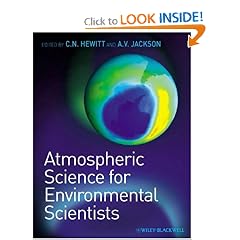
Atmospheric Science for Environmental Scientists 1/e 2009


Harga: Rp 921.000,-


Pengarang: C. Nick Hewitt, Andrea V. Jackson
Jumlah halaman: 320
Penerbit: Wiley-Blackwell
Edisi: 1
Tahun terbit: 2009
Bahasa: Inggris
ISBN-10: 1405185422
ISBN-13: 978-1405185424
Versi digital / elektronik: tersedia

Deskripsi:
This book gives undergraduate and graduate students and professionals working in the science and policy of pollution, climate change and air quality a broad and up-to-date account of our understanding of the processes that occur in the atmosphere, how these are changing as Man’s relentless use of natural resources continues and what effects these changes are having on the Earth’s climate and the quality of the air we breath.
Written by an international team of experts, this text gives an excellent overview of our current understanding of the state of the Earth’s atmosphere and how it is changing. It is an invaluable resource for students, teachers and professionals.
Key features:
  • End of chapter questions.
  • Each chapter includes both basic concepts and more in-depth material, allowing faculty to direct students accordingly.
  • Most up-to-date treatment of key issues such as stratospheric chemistry, urban air pollution, and climate change.

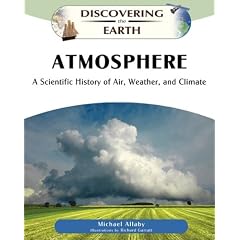
Atmosphere: A Scientific History of Air, Weather, and Climate (Discovering the Earth) 1/e 2009


Harga: Rp 455.400,-


Pengarang: Michael Allaby
Ilustrator: Richard Garratt
Hardcover: 242 
Penerbit: Facts on File / Sage Publications
Edisi: 1
Tahun terbit: 2009
Bahasa: Inggris
ISBN-10: 0816060983
ISBN-13: 978-0816060986
Versi digital / elektronik: tersedia

Atmosphere and Climate: Studies by Occultation Methods 1/e 2006


Harga: Rp 2.415.300,-


Pengarang: Ulrich Foelsche, Gottfried Kirchengast & Andrea Steiner
Hardcover: 336 
Penerbit: Springer;
Edisi: 1
Tahun terbit: 2006
Bahasa: Inggris
ISBN-10: 3540341161
ISBN-13: 978-3540341161
Versi digital / elektronik: tersedia

Emerging Environmental Technologies 1/e 2008


Harga: Rp 1.125.200


Pengarang: Vishal Shah
Jumlah halaman: 174
Penerbit: Springer
Edisi: 1
Tahun terbit: 2008
Bahasa: Inggris
ISBN-10: 1402087853
ISBN-13: 978-1402087851
Versi digital / elektronik: tersedia

Deskripsi:
With increasing attention being paid to the changing environment and the underlining reasons from the change, scientists are working at a faster pace to invent technologies that could have a positive impact. This book exclusively focuses on the technologies that would be in the forefront in near to far future. Each and every article in the book is peer-reviewed and discusses the current environmental challenges, the novel innovation and future directions.
The topics covered in the book include microbial fuel cells, hybrid solar lighting, bacterial swimming for environmental remediation, cleaner engines, nanoparticles for effluent treatment, surface catalysis and proteins as gas hydrates inhibitors. This book will be suitable for academicians, industries and governmental/non-governmental agencies in the field of environmental sciences and technology.

Forestry and Climate Change 1/e 2007


Harga: Rp 1.425.900


Editor: P H Freer-Smith, M S J Broadmeadow, J M Lynch
Jumlah halaman: 260
Penerbit: CABI Publishing
Edisi: 1
Tahun terbit: 2007
Bahasa: Inggris
ISBN-10: 1845932943
ISBN-13: 1845932943
Versi digital / elektronik: tersedia


Deskripsi:
Drawing together perspectives from researchers and policy makers, this book explores how forests will interact with the physical and natural world, and with human society as the climate changes. Also considered is how the world's forests can be managed to contribute to the mitigation of climate change and to maximize the full range of economic and non-market benefits. Providing an examination of the science, a detailed consideration of the science policy interface and the international frameworks and conventions, this book is valuable reading for all those interested in sustainable forest management, climate change and the associated environmental sciences.

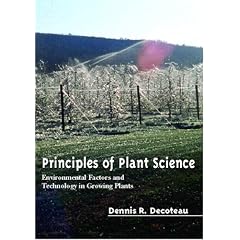
Principles of Plant Science: Environmental Factors and Technology in Growing Plants 1/e 2005


Harga: Rp 1.222.200


Pengarang: Dennis R. Decoteau
Jumlah halaman: 435
Penerbit: Prentice Hall
Edisi: 1
Tahun terbit: 2005
Bahasa: Inggris
ISBN-10: 0130163015
ISBN-13: 978-0130163011
Versi digital / elektronik: tersedia

Deskripsi:
Principles of Plant Science: Environmental Factors and Technology in Growing Plants is a unique text ideally suited for use in any introductory Plant Science or Horticulture course as well as courses in Plant Growth and Development or introductory Applied Plant Physiology.
An overview of the plant sciences—including the role of plants in the development of societies, industries, and science—provides essential background information and an emphasis on non-forest agricultural crops in chapters 1 through 4. A primer on plant growth and development (chapters 5 through 8) follows, with coverage of photosynthesis and respiration, plant hormones, and ecology. The influence of the environment on agricultural plant production constitutes the remainder of the material (Chapters 9 through 20) and is the primary emphasis of the text.
This emphasis on the scientific principles associated with effects of environmental factors on plant development is designed to also equip readers to better understand current and emerging technologies that modify the environment for improving plant production.

Climate Change and Managed Ecosystems 1/e 2005


Harga: Rp 1.803.700


Editor: Jagtar Bhatti, Rattan Lal, Michael J. Apps, Mick A. Price
Jumlah halaman: 464
Penerbit: CRC Press
Edisi: 1
Tahun terbit: 2005
Bahasa: Inggris
ISBN-10: 0849330971
ISBN-13: 978-0849330971
Versi digital / elektronik: tersedia


Deskripsi:
Featuring contributions from leading experts in the field, Climate Change and Managed Ecosystems examines the effects of global climate change on intensively constructed or reconstructed ecosystems, focusing on land use changes in relation to forestry, agriculture, and wetlands including peatlands. The book begins by discussing the fragility of ecosystems in the face of changing climates, particularly through human caused increases in atmospheric GHGs. The chapters delineate how and why the climate has changed and what can be expected to occur in the foreseeable future. They identify the potential adaptation responses to reduce the impacts of a changing climate.
Using this information as a foundation, the chapter authors examine what is known about the impacts of climate on agricultural, forested, and wetland ecosystems. They illustrate the importance of these ecosystems in the global carbon cycle and discuss the potential interaction between terrestrial and atmospheric carbon pools under changing climactic conditions. The book delineates what needs to be done to ensure continued stability in these ecosystems. It includes a description of activities that have been undertaken in the past to identify gaps in understanding GHG emissions from agriculture, forests, and wetlands and their mitigation, as well as current research initiatives to address these gaps.
The book presents an overview of how economic reasoning can be applied to climate change and illustrates how terrestrial carbon-uptake credits (offset credits) operate within the Kyoto Protocol framework. By identifying gaps in the current understanding of adaptation of mitigation strategies, the book underscores the need to make management of these ecosystems part of a global solution.

Accounting

Business

Finance and Investments

Macroeconomics

Management

Marketing and Sales

Designed by Web2feel.com | Bloggerized by Lasantha - Premiumbloggertemplates.com | Affordable HTML Templates from Herotemplates.com.
Copyright 2010-2013 EconomicLib.com - All Rights Reserved.